Don't Rush the Last Lap: Six UK Markets Where the Final Hour Does the Talking
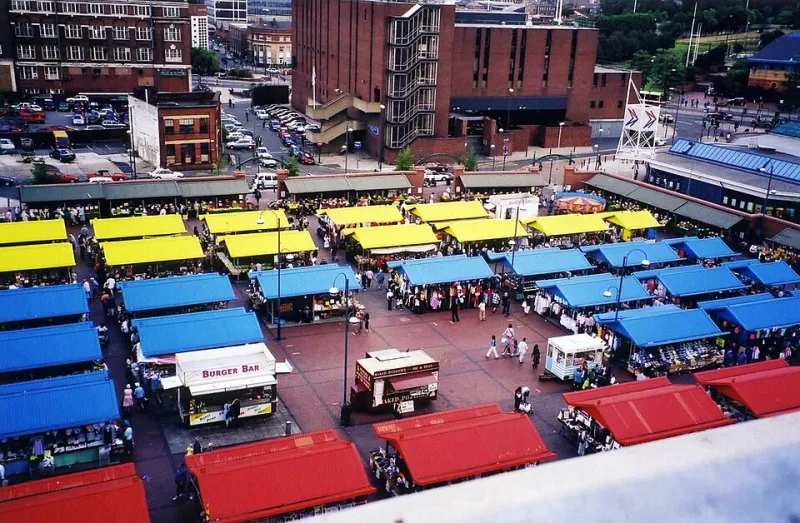
Photo: John M Wheatley, CC BY-SA 2.0, via Wikimedia Commons
There is a moment on a Saturday afternoon when a market changes gear. The lunch crowd has gone, the tote bags are limp, and the traders are starting to think about the van. It is usually somewhere around three o'clock. And it is, quietly, the best hour to be there.
Not because everything gets slashed to a pound. It doesn't. But because the whole rhythm of the place shifts from selling to sorting out. You hear real prices instead of display prices. You get a bit of chat. You see which stalls are worth coming back to next week. This is a Bill Hay guide to doing the last hour properly.
Why the final hour is different
A market at 9am is a performance. Everything is stacked, labelled and facing forward. By 3pm it is a workshop. Crates are being folded, boxes are being consolidated, and the trader is doing mental arithmetic about what needs to go home in the van and what doesn't.
That is when genuine end-of-day reductions appear. Not on the pottery mugs or the handmade candles — those will keep until next Saturday. But on the things that won't: bread, bagged salad, soft fruit, cut flowers, cheese that has been out since dawn. The trader isn't doing you a favour. They are solving a logistics problem. You just happen to be the solution.
How to spot a genuine reduction
A real late deal has a few tells. It is usually on something perishable. It is spoken out loud rather than written on a card at 8.45am. And it is offered, not dragged out of someone. If you have to negotiate hard for a bunch of tulips, it isn't a bargain — it's a debate.
Ask a simple question: 'Are these going tonight?' That gives the trader an easy way to say yes or no without either of you pretending this is a scenes-from-a-film moment. If the answer is yes, take the price. If it's no, buy a smaller bunch and say thanks. Do not launch into a lecture about food waste. Nobody needs that at 3.15pm.
Be careful with meat and dairy unless you can see the cold chain is still doing its job. A reduced label is not a licence to be brave. And cash helps, but don't make a thing of it. A card reader that still has battery is just as welcome as a fiver.
When to haggle, and when to just have a chat
Haggle on volume, not on the last single item. Asking for a price on two punnets or a whole box is fair. Asking for 20p off one lemon while someone is serving three people is not. Wait your turn. Start with something human: 'Quiet now, isn't it?' Then ask about the produce. The deal, if there is one, will usually arrive on its own.
And if a trader says no, that is the end of it. Buy something small or wish them a good weekend. The last hour is not a clearance event. It is a conversation with a clock.
Six markets worth timing your Saturday around
Closing times move with the seasons, so check before you travel. Winter hours can be earlier, and some stalls pack down before the market officially shuts. But these six are good places to practise the last-hour habit.
Bury Market, Greater Manchester
Bury is a proper market town market, with an indoor hall and outdoor pitches that feel like they have been there since before anyone thought to call it a 'destination'. The black pudding stalls are famous, but the last hour is more about flowers, bread and the café counters. Arrive around 3.30pm, buy what's going, and sit down with a tea while the traders start stacking.
Norwich Market, Norfolk
The rows of stalls under the colourful awnings are a Norwich institution. Late afternoon is when the fruit and veg sellers start consolidating boxes and the bread stall gets realistic. It is also when the market café feels less like a pit stop and more like the front room of the city. Don't block the walkways with your bags.
Shrewsbury Market Hall, Shropshire
This one is indoor, which makes it a fine choice when the weather is doing its worst. The first-floor café is the sort of place where you can watch the whole hall wind down. The last hour here is closer to four than three, so shift your clock. The cheesemonger and the flower stalls are the ones to watch. The craft stalls are not — and shouldn't be.
Leeds Kirkgate Market, West Yorkshire
Kirkgate is vast, and the last hour can feel like a treasure hunt if you know which aisles to walk. The food hall is the obvious draw, but the flower and bakery stalls are where the quiet deals happen. Give yourself time to get lost. Then give yourself time to sit down.
Cardiff Central Market, South Wales
Cardiff's market is a Victorian confection of ironwork and high ceilings, and the last hour has a lovely slightly chaotic energy. The cheese counters, bakery stalls and flower sellers are the ones doing the honest reductions. The cafés are good for a late pot of tea. Just don't expect the same prices as the morning — that's not the point.
St Nicholas Market, Bristol
Bristol's old market is at its best when the lunch rush has cleared and the stalls are still open but no longer frantic. The street food end stays busy, but the produce and flower stalls start to soften. It is a good market for a wander-and-chat approach rather than a shopping list.
The market café rule
Do not skip the café. The last hour is when traders take their first proper breath, and the café is where you see the market as a workplace rather than a backdrop. Order a tea, sit where you can see the stalls, and don't take up a table for an hour with one lukewarm Americano. In Bury, Norwich and Shrewsbury especially, the café is part of the reason to go.
A short etiquette list
Ask before you photograph a stall or a trader. Don't grab the last box if someone else is clearly waiting. Bring a bag that isn't going to split on the bus. And don't haggle at 9am and then expect a warm welcome at 3pm. Markets run on memory.
By four o'clock the vans are usually at the doors, the awnings are coming down, and someone is sweeping. That's the signal to finish your tea and go. In 2026, when so much of life happens on a screen, a market in its last hour is a very good place to spend a Saturday afternoon. You just have to arrive late on purpose.